MAPPA-en
Kenya - Maisha Bora
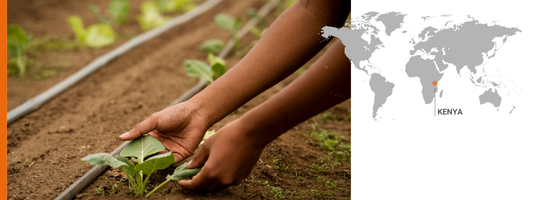
MAISHA BORA - Business, environment, and nutrition for sustainable development
AREA OF INTERVENTION
Molo Sub-County, Nakuru County, Kenya
OBjective
To contribute to the improvement of the nutritional status of the rural population through a multidimensional approach that integrates several interconnected components. The initiative promotes an ecologically sustainable agri-food development system, combining environmental, social, and economic aspects to address food security and reduce malnutrition.
CONTExt
Kenya and Nakuru County still show high levels of food insecurity and malnutrition, especially among children under five and women, despite national policies focused on nutrition. In Nakuru, indicators of stunting, wasting and underweight are worse than the national average and are linked to poor diets, recurrent illnesses, lack of water and sanitation, limited access to nutrition education, and strong gender inequalities in access to resources and services. Community health facilities have limited resources: there are no nutritionists, updated data, or adequate spaces and tools for diagnosis and follow-up, and nutrition services are underused, particularly for maternal, neonatal and adolescent health. At the same time, Molo is an area with high agricultural potential, but unsustainable practices, soil degradation, loss of forest cover, the effects of climate change and low financial literacy among small producers reduce agricultural and dairy productivity, increasing dependence on imported powdered milk and limiting income opportunities. In this context, the Maisha Bora project works to strengthen community-based management of malnutrition, enhance five health facilities, improve agricultural practices and the dairy value chain, and create fairer and more sustainable conditions for food security among rural communities in Molo.
mmi activities
- Strengthen the response to malnutrition in Molo Sub-County by improving health services and reinforcing links with rural communities.
- Train healthcare personnel, community health workers, and preschool teachers to identify malnutrition early and guide families and children toward healthier dietary practices. At the same time, support five healthcare facilities by providing nutritionists, equipment, and activities for screening, follow-up, and awareness-raising, in order to make malnutrition prevention and care more accessible and consistent across the territory.
BENEFICIARIES
The direct beneficiaries of the project’s actions will be 11,800 people, including:
-
Women and men from rural communities (with a focus on women of reproductive age, pregnant and lactating women)
-
Children under 5 years old (especially those who are malnourished or at risk)
-
Parents and caregivers of preschool children
-
Health and educational personnel (270 trained operators)
-
Women and young farmers (with at least 50% women among training participants)
-
Vulnerable individuals: families with people living with HIV, children with disabilities, adolescent mothers
The indirect beneficiaries of the initiative will be the entire community of Molo Sub-County.
PROJECT LEAD
- Mani Tese ETS
italian PARTNERs
- Medicus Mundi Italia ETS
- Fondazione Imagine ESG ETS
- Università degli Studi di Torino (UNITO)
- CreSud S.p.A.
local PARTNER
- 3Es (Environment, Entrepreneurship, Energy)
CO-FUNDING

Every donation is a meaningful action that has the power to make a real difference in the lives of many
DONATE NOW
To support our projects you can:
- make an online donation
- make a money transfer to Medicus Mundi Italia ETS IT82O0869211202017000175403

Medicus Mundi Italia MMI - ETS
CF 98011200171
Via Collebeato 26, 25127 Brescia BS
Tel. +39 030 37 52 517 - 030 69 50 381
WhatsApp +39 351 3051779